TL;DR
If the same drain keeps blocking no matter how often it's cleared, tree roots are one of the most common underlying causes in Reading's older, tree-lined suburbs. Roots don't grow through solid pipe — they exploit a crack or open joint that's already there, then expand until a one-off clearance turns into a repeat callout. A CCTV survey is the only reliable way to confirm root ingress and plan the right fix. If you're dealing with a drain that clears and blocks again within weeks, book an inspection online before the next visit becomes another temporary fix.
Why Roots Target Drains in the First Place
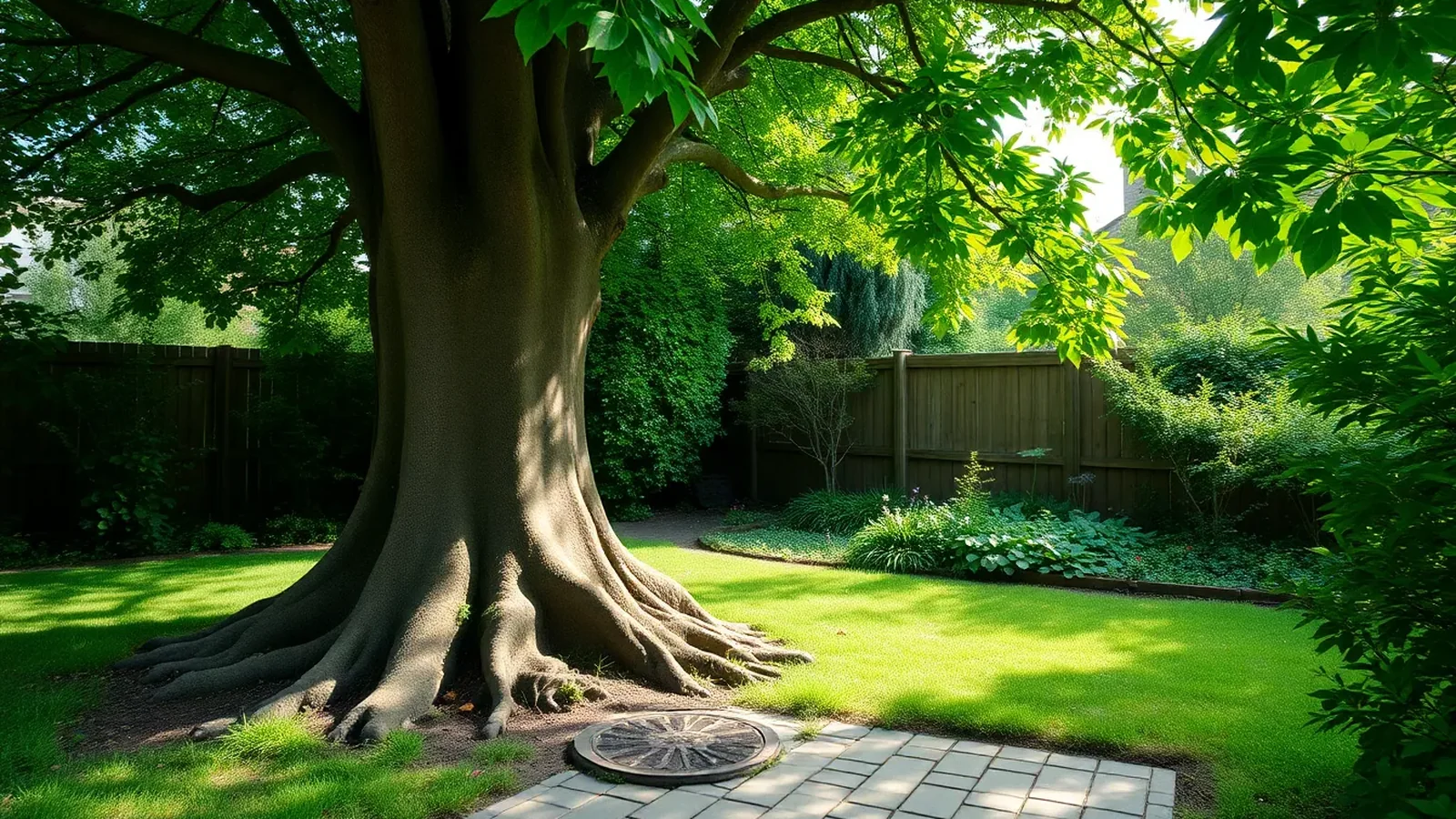
Tree roots grow toward moisture and nutrients, and a drain carrying wastewater is exactly that — a steady, reliable source of both. Roots don't force their way through intact pipe walls. Instead, they find a weakness that's already there: a hairline crack from ground movement, a joint that has opened slightly, or a section that's settled unevenly. Once a fine root finds its way in, it thickens over time, widening the gap and catching debris, wet wipes and fat as it grows — which is usually what turns a slow-draining pipe into a full blockage.
Older clay drainage — common throughout Reading's Victorian and inter-war housing — was typically laid with spigot-and-socket joints sealed using cement or clay mortar. Those rigid seals were never designed to flex, and decades of ground movement and seasonal shrink-swell in the Thames Valley's clay subsoil are usually enough to open them by fractions of a millimetre — more than a searching root tip needs. Modern uPVC drainage, laid with flexible rubber-ring joints, resists root ingress far more effectively, which is one reason replacing a length of old clay pipe often solves a recurring root problem for good rather than simply delaying it.
Reading's Suburbs Are Particularly Exposed
Several of Reading's residential areas combine two conditions that make root ingress more likely: mature trees and ageing drainage.
Streets around Earley and Tilehurst, and the roads near the University of Reading's Whiteknights campus, feature established London plane trees, limes and other large species planted decades ago, often close to drainage runs that were laid before anyone considered where the roots would eventually reach. Many of these systems are now 50 to 90 years old, giving roots plenty of time to find their way into ageing joints. As a general rule, the larger a tree grows, the further its root system tends to extend — which is why an avenue of mature limes or planes lining a street can affect drainage on several plots at once, not just the garden the tree stands in.
Victorian terraces in Katesgrove and West Reading face a related issue: narrow rear gardens with shared drainage runs, where a single mature tree can affect the pipework serving several neighbouring properties at once.
Diagnosing Root Ingress Properly
Because root damage happens underground, guessing isn't a reliable strategy. A drainage investigation sends a waterproof camera through the pipe to record its actual condition, which is the standard first step whenever a blockage keeps recurring in the same place.
Drainage engineers assess what they see against the WRc's Manual of Sewer Condition Classification (MSCC5) — the industry-standard system used across the UK water sector to grade structural and service defects in sewers and drains by severity. A pipe with fine root hairs graded as a minor service defect is a very different repair job to one where roots have caused a structural crack or partial collapse, and the survey footage is what tells an engineer which one they're looking at. The survey also records exactly how far along the run the roots have reached, which matters just as much as the grade itself when planning a repair — a defect close to an access point is a very different job to the same defect much further down the line.
Fixing the Problem, Not Just the Symptom
Once the survey identifies where and how severe the root ingress is, the right fix generally falls under our drain repairs service — commonly either relining the damaged section from the inside without digging up the garden, or, where the pipe has collapsed or is too damaged to reline, excavating and replacing that section directly. Relining involves feeding a resin-coated liner into the existing pipe and curing it in place to form a new, jointless inner pipe — an option that avoids disturbing an established garden, but only where the original pipe still has enough structural integrity to support it. Where roots have caused a full collapse, or the pipe has moved too far out of alignment, excavation is usually the more reliable route to a lasting repair.
Cost depends on how much of the run is affected, how deep the pipe sits, and which of those two approaches suits the specific defect — every garden and every root system is different, which is why we assess before quoting rather than pricing blind. Request a fixed-price quote online once we know exactly what we're dealing with.
Reducing the Chance of Recurrence
Clearing the blockage without addressing the root ingress usually means the same problem returns within months, since the roots that caused it are still there and the opening they found hasn't been sealed. If you're in Earley, Tilehurst or anywhere else in Reading with mature trees near your drainage, a periodic CCTV check catches developing root damage while it's still a minor repair rather than a full excavation. It's also worth factoring drainage into any garden landscaping — planting new trees well clear of a known drain run, rather than directly over or beside it, avoids creating the next generation of the same problem.
We also cover Wokingham and the wider area if you're dealing with the same issue outside Reading itself. Get in touch online to arrange a survey.