TL;DR
A single blocked toilet and a single blocked sink are usually straightforward, localised problems. But when a toilet, sink and bath all start playing up around the same time, the fault is rarely in any one of those fixtures — it's almost always further down the shared pipework. Knowing which pattern you're looking at helps you, and your engineer, go straight to the right fix instead of clearing one fixture only to have the next one back up an hour later. If more than one drain in your home is misbehaving, describe what's happening online and we'll help you work out where the problem actually sits.
Telling Single-Fixture Problems from Multi-Fixture Problems
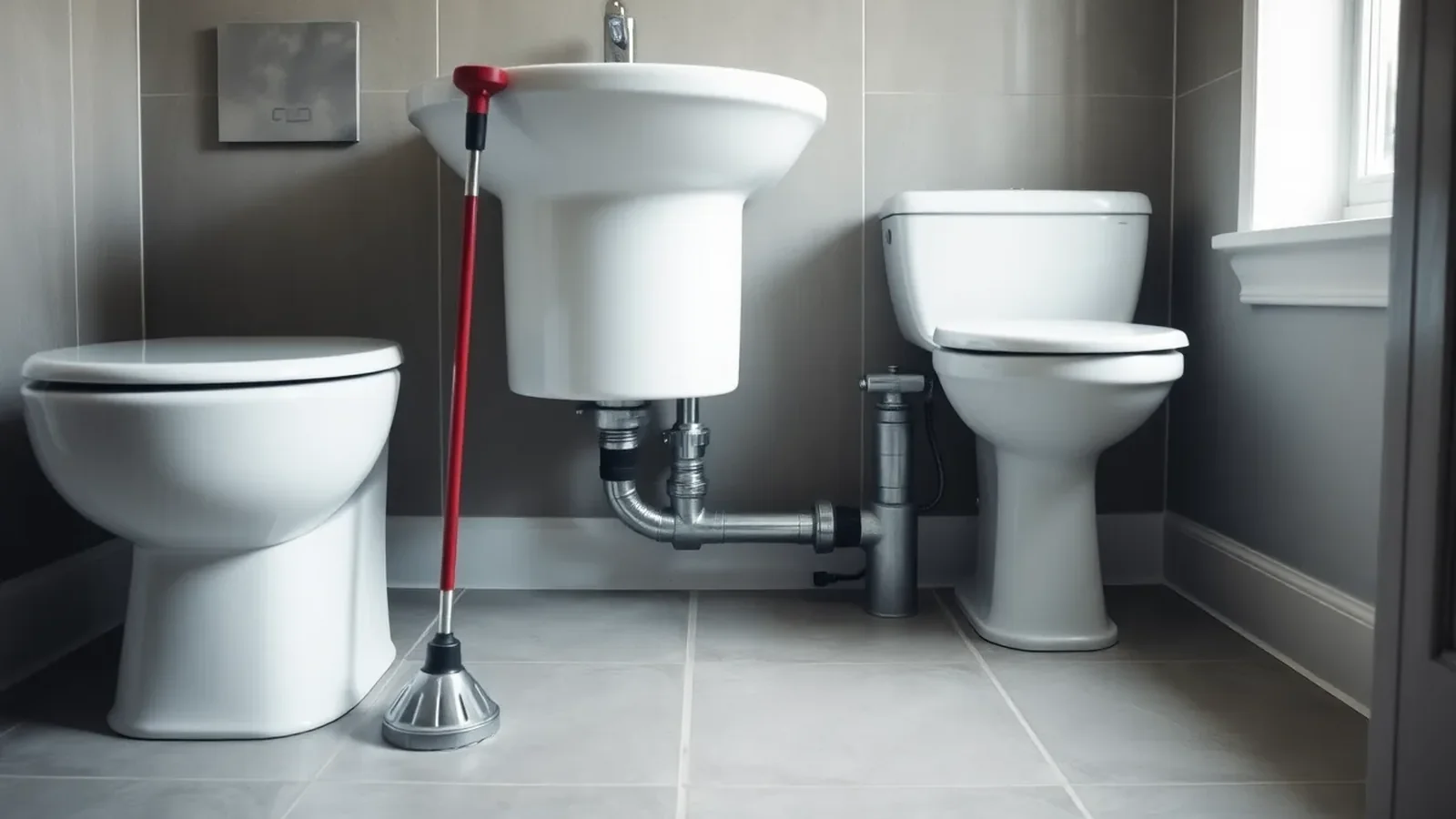
The clearest diagnostic clue is simply how many fixtures are affected. A toilet that won't flush properly while every other drain in the house works normally almost always has an obstruction in the pan, trap or the short run of pipe immediately downstream — something lodged close to the fixture itself. The same logic applies to a single blocked sink: if the bath and toilet drain normally, the problem is very likely local to that one waste pipe.
Once two or more fixtures are affected together, the picture changes. That pattern points to a blockage further along a shared branch or stack, where wastewater from multiple fixtures joins before leaving the property — meaning clearing the visible fixture won't fix anything, because the obstruction sits somewhere neither fixture can reach on its own.
There's a useful middle case too. If every ground-floor fixture is affected but everything upstairs drains normally, the fault is likely in the branch or stack below the point where the ground floor connects in — a detail worth noting even before an engineer arrives, since it narrows down roughly where along the run the problem is likely to sit.
Why Reading's Housing Mix Makes This More Relevant
How fixtures share pipework depends heavily on when a property was built, and Reading has a genuinely wide spread of housing ages. Victorian terraces in Katesgrove and West Reading were plumbed for far lighter use than they see today, with narrow shared runs that can struggle once several fixtures drain into them in quick succession. Post-war estates in Whitley and Southcote generally use concrete drainage systems that are now past their originally intended design life, while inter-war semis across Tilehurst and Earley sit somewhere in between, often with drainage systems 50 to 90 years old.
Extensions and loft conversions add another layer of complexity. A converted property with an added ground-floor WC or a new en-suite often ties into an existing stack at a point that wasn't part of the original design, and those retrofitted connections are a common source of the "why does the new bathroom back up whenever the old one is used" pattern that turns up in Reading's many extended and converted terraces and semis.
None of this means older housing is guaranteed to have problems — but it does mean the "one fixture or several" question is a genuinely useful first check before assuming the cause, rather than a formality.
Why Clearing the Wrong Fixture Wastes a Visit
Treating a multi-fixture blockage as though it's a single-fixture problem is the most common way a straightforward job turns into two or three separate call-outs. Clearing a toilet pan when the actual obstruction sits in the shared branch beyond it will often restore flow briefly, only for the same symptoms to return once normal water use resumes, because the underlying blockage was never actually touched. Correctly identifying the pattern before work starts is what prevents that cycle, and it's why an engineer will usually ask about every fixture in the property, not just the one that's obviously affected.
What to Check Before You Call Anyone Out
A few quick observations make a real difference to how fast a problem gets diagnosed:
- Note exactly which fixtures are affected — toilet only, sink only, or more than one
- Check whether water rises in one fixture when you flush or run another, a sign they share pipework
- Listen for gurgling from a fixture that isn't currently in use
- Check whether the problem is confined to one floor or affects fixtures on multiple levels
- Note whether the problem started suddenly or has been getting gradually worse over several days
Any of these details help an engineer decide whether the job is a straightforward blocked toilet or blocked sink clearance, or something that needs a closer look further down the shared line.
When It's More Than a Single Fixture
If several fixtures are affected, or the same single fixture keeps blocking again within days of being cleared, the underlying cause is usually somewhere the naked eye can't reach. That's when a proper diagnostic approach, rather than repeated visits to the same fixture, actually saves time and effort. Our blocked drains team can assess whether the fault is fixture-level or further down the shared pipework, and recommend the right next step rather than guessing, including whether the underlying run needs a closer look before the same symptoms come back.
There's no need to work out the exact cause yourself before getting in touch — the pattern of which fixtures are affected, and when, is often enough for us to have a good idea of where to start before an engineer even arrives.
We cover Reading and surrounding towns including Bracknell. Get in touch online with a description of what's happening and we'll advise on the best way forward.