TL;DR
Not every blocked or damaged drain in Reading is your responsibility to fix. Pipes inside your boundary that serve only your property are generally yours; once they join a shared run or cross into the public network, Thames Water typically takes over. Getting this wrong can mean paying for a repair that was never yours to fund — or waiting on a water company for a fault that's actually on your side of the boundary. If you're not sure which side of the line your problem sits on, request a drain investigation online and we'll help you work out who's responsible before any work begins.
Private Drains, Shared Drains and Public Sewers
UK drainage law splits underground pipework into three broad categories, and the terminology trips a lot of homeowners up.
A private drain serves a single property and sits entirely within its boundary — this is the homeowner's responsibility to maintain and repair.
A shared drain (sometimes still called a "lateral drain") collects wastewater from two or more properties before it reaches the public sewer. In Reading's Victorian terraces around Newtown, Katesgrove and West Reading, rear drainage runs typically serve an entire row of houses through narrow back gardens, meaning a blockage in one property's line can back up into several neighbours at once.
A public sewer is owned and maintained by the water company — Thames Water across the Reading area — and usually starts once a drain leaves the last property boundary on its route to treatment.
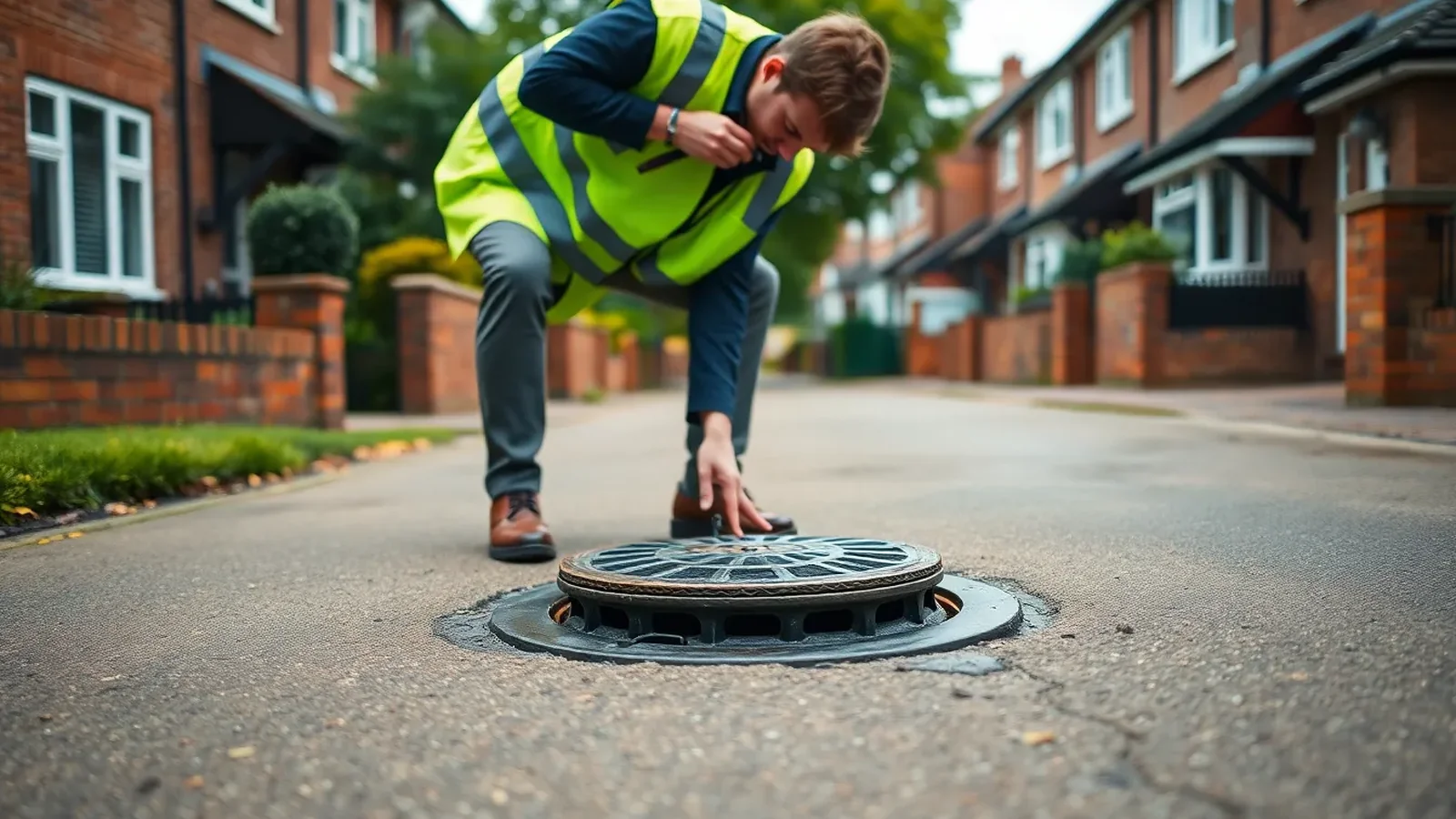
In practice, the private-to-shared boundary is usually the last inspection chamber before the drain leaves your plot: anything upstream of that chamber is generally yours, anything downstream typically isn't. That's a useful rule of thumb, but it isn't a substitute for actually seeing where your inspection chambers sit — something that isn't always obvious in a garden that's been paved over, extended, or altered since the drainage was first laid.
Since October 2011, most shared drains and private sewers that existed before that date transferred into water company ownership across England and Wales, which is why many properties that assume they own their entire drain run to the street are, in fact, only responsible for the section closest to the house. It's a boundary that genuinely surprises people, and it's worth checking rather than assuming.
Why This Matters for Reading's Older Housing Stock
Responsibility questions come up most often in exactly the streets where Reading's drainage is oldest. Terraced properties across Katesgrove, West Reading and Newtown share rear drainage runs that were built for a single household's Victorian-era water use, not the washing machines, dishwashers and power showers of a modern terrace. When one of those shared runs blocks, it's rarely obvious from inside a single house whether the fault sits in your private pipework or in the shared or public section beyond it.
The same uncertainty applies in inter-war and post-war areas like Tilehurst, Earley and Whitley, where drainage systems installed decades apart can meet at a single junction — sometimes with the ownership boundary running straight through the middle of a garden.
Why It Matters When Buying, Selling or Extending
Drain responsibility stops being an academic question the moment a property changes hands or gets extended. A seller who has lived with a slow-draining shared run for years may never have needed to establish who's responsible for it; a buyer inheriting that same run needs to know before completion, not after moving in. This is one of the reasons a CCTV survey is the standard pre-purchase check on older Reading properties — it establishes both the condition of the pipe and where the ownership boundary is likely to fall, before that information becomes urgent.
It's also worth checking before any extension or loft conversion that adds a new bathroom or kitchen. Tying new fixtures into a drain that's already shared with a neighbour increases the load on a run that may already be marginal, and it's far cheaper to understand that beforehand than to discover it the first time the extended property causes a blockage next door.
How to Find Out Where the Boundary Actually Sits
The only reliable way to establish responsibility is to see the pipe. A CCTV drain survey records the full run in high definition, showing exactly where your private drain ends and a shared or public section begins, along with the condition of the pipe at each stage. This is far more useful than guessing from a manhole cover position, since older Reading properties frequently have drainage layouts that don't match modern assumptions.
A proper survey doesn't just show where the pipe runs — it records the pipe material, its condition at each point along the route, and where a change in ownership is likely to fall based on where the run crosses the boundary. That written record is useful well beyond the initial diagnosis: if a dispute over responsibility ever needs to go to a neighbour, a managing agent, or Thames Water, documented evidence of where the fault actually sits carries far more weight than a verbal opinion or a guess.
If the survey confirms the fault is on your side of the boundary, we can quote for drain repairs — anything from clearing a blockage to relining a damaged section. If it turns out the problem is in the public network, we'll tell you plainly, so you can report it to Thames Water rather than pay for work that isn't yours to fund.
Getting a Straight Answer, Not a Guess
Drain responsibility isn't always intuitive, and getting it wrong wastes time and money in either direction. Whether you're dealing with a recurring blockage in a Katesgrove terrace or a slow drain in a Tilehurst semi, the starting point is the same: find out what's actually happening underground before anyone commits to a repair. Establishing the facts first, rather than assuming who's responsible, is what stops a straightforward job turning into a drawn-out dispute with a neighbour or a water company.
We cover Reading and the surrounding area, including Caversham on the north side of the Thames. Get in touch online to arrange a survey or ask a question about responsibility before you decide what to do next.